
Recovery & Injuries · Intermediate · 6 min read
Tennis Elbow: Causes, Fixes and Training Around It
Tennis elbow is a tendon problem on the outside of the elbow — where the forearm extensors attach — and lifters get it from gripping and pulling, not from tennis. It is stubborn, but it responds to what fixes most tendons: the right load, applied patiently. Rest alone just delays it.
On this page
What tennis elbow is
The tell is specific: pain on the outside of the elbow that fires when you grip something heavy, turn a stiff handle, shake hands or hold a bar at arm's length. Pressing is usually fine; pulling is where it complains.
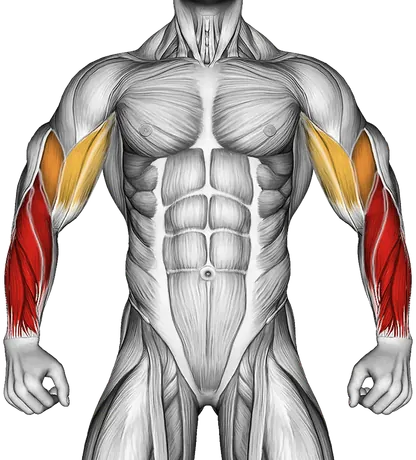
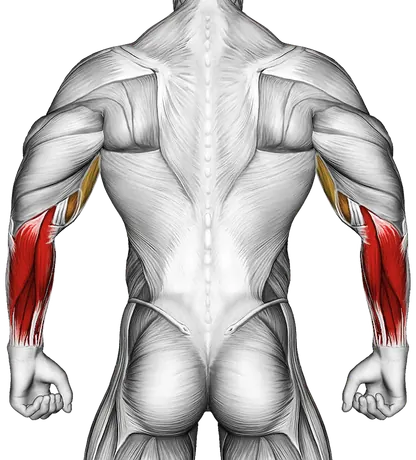
The tissue involved is the common tendon of the forearm extensors — the muscles that lift the wrist and keep the fingers closed around a bar. They work on every row, every pull-up, every deadlift and every curl, which is why a grip-and-pull hobby like lifting produces a condition named after tennis. Doctors call it lateral epicondylitis; "tendinopathy" is the more honest word — the tendon is irritated and structurally weakened, not simply inflamed.
Why lifting brings it on
The pattern behind most cases is a load spike: a new program, a new grip width, a deadlift block that jumps volume, or a week of moving house on top of training. The tendon tolerates steady work well and complains about sudden jumps — the same story as tendon pain from lifting everywhere else in the body.
Equipment makes it better or worse. Thick bars and fat grips shift work into the forearm; lifting straps take it away. Wrist position matters too — a wrist that curls under on rows and pull-ups loads the extensors far harder than a neutral one. The grip strength guide covers the capacity side; the common form mistakes guide covers the setups that quietly overload the arms.
The loading fix
- Settle the flare first: drop the heaviest pulling for a week or two while everything else keeps training.
- Start isometrics: squeeze a soft ball or hold a light dumbbell at the wrist for 30–45 seconds, several times a day.
- Progress to slow wrist extensions: light dumbbell, wrist hanging off the knee, up in two seconds, down in four.
- Add load weekly as long as the work stays at three-out-of-ten pain or less.
- Rebuild pulling volume gradually — straps and neutral grips while the tendon catches up.
Tendons respond to load, not to rest. The isometric holds calm the pain while the slow extensions — the lowering phase matters most — rebuild the tendon's capacity. This is the same rehab logic as the tendon pain from lifting guide: hurt, not harm, and progress weekly.
Expect the timeline in weeks, not days: most lifters feel meaningful change in four to six weeks and full confidence in three months. Ice and anti-inflammatories are fine for a bad flare, and a counterforce brace worn during heavy work takes the edge off. Neither replaces the loading — they only buy it a fair chance.
Adjusting the program
- Rows and deadliftsGrip is the limiterLifting straps, mixed or neutral grip
- Pull-ups and pulldownsElbow angle under loadNeutral grip, band help, slower reps
- CurlsFixed wrist, heavy supinationHammer curls, lighter weight, full control
- Fat-grip and behind-the-neck workWrist and elbow torqueDrop both for a few weeks
The rule while the tendon recovers is simple: keep the back and arm training, move the stress away from the elbow. Straps on heavy pulls are the single most useful change — they keep the training effect while the forearm heals. The hammer curl form guide covers the curl variation most elbows tolerate best.
Everything else in the program continues as normal. The classic mistake is stopping all pulling for a month, losing capacity, and meeting the same workload again with a weaker arm.
What does not help, and when to get it checked
- Load the wrist extensors daily and patiently
- Use straps on heavy pulls while the tendon recovers
- Keep training the rest of the body as normal
- Judge progress by the week, not by the day
- Chase the pain with deep massage and aggressive stretching
- Rest completely for weeks — the tendon gets weaker, not better
- Push through sharp pain that makes the grip fail
- Buy every brace and gadget before committing to six weeks of loading
If six weeks of consistent loading change nothing, a physiotherapist can check the neck and shoulder referral patterns and rebuild the plan. Injections and surgery sit at the far end of the list, for cases that genuinely do not respond — not as shortcuts past the loading work.
The record that shows the comeback
- Tennis elbow is a tendon overload at the outer elbow — gripping and pulling spikes, not tennis.
- It heals with progressive loading over 6–12 weeks; rest alone just delays it.
- Isometrics calm it, slow wrist extensions rebuild it — daily, patient, mildly uncomfortable.
- Keep training with straps and neutral grips; drop fat-grip and behind-the-neck work for a while.
- Night pain, numbness, a locked elbow or dropping things: get it looked at properly.
Frequently asked questions
How do I get rid of tennis elbow fast?
There is no fast fix, but the quickest reliable route is daily isometric holds and slow wrist extensions, straps on heavy pulls, and cutting the aggravating grip work for a couple of weeks. Most people feel real change in 4–6 weeks.
Can I lift weights with tennis elbow?
Yes — keep training and use lifting straps on rows, deadlifts and pull-ups. Switch curls to hammer curls, drop fat-grip work, and keep wrist-extensor loading light and daily.
Should I rest tennis elbow completely?
No. Complete rest weakens the tendon and usually just delays the problem. Reduce the heaviest aggravating work for a week or two, then load the tendon progressively.
How long does tennis elbow take to heal?
With consistent loading most cases improve within 4–6 weeks and settle fully over 2–3 months. The pain fading is progress; rebuilding full capacity takes a little longer.
Related guides
Tendon Pain From Lifting: What to Do First
Tendon pain from lifting: what causes it, how to modify training instead of stopping, a simple pain rule, how to rebuild, and when to see a clinician.
Advanced · 4 min read
Grip Strength for Lifters
Grip strength for lifters: the three types of grip, the best exercises to train them, how to program grip work, and when to use chalk and straps.
Intermediate · 4 min read
Hammer Curl Form: Muscles Worked, Mistakes and Variations
Hammer curl form, step by step: muscles worked, why the neutral grip is different, the mistakes that waste the set, the best variations and how to program them.
Beginner · 5 min read
Shoulder Pain from Lifting: Causes, Fixes and Safe Training
Shoulder pain from lifting explained: what causes it in pressing and pulling, how to train around it, the fixes that help, and when to see a doctor.
Beginner · 4 min read
This guide is general educational information, not medical advice. Train within your ability and consult a qualified professional before starting a new program if you have an injury or health condition.