
Programs & Splits · Beginner · 5 min read
Pilates vs Strength Training: Which One Builds What
Pilates and lifting solve different problems, yet the internet argues about them as if only one could be right. One is precise, low-load movement built around the trunk; the other is progressive overload against external weight. Here is what each actually changes in the body, where Pilates genuinely wins, and how to fit both into a week without doubling your gym time.
On this page
What each one actually is
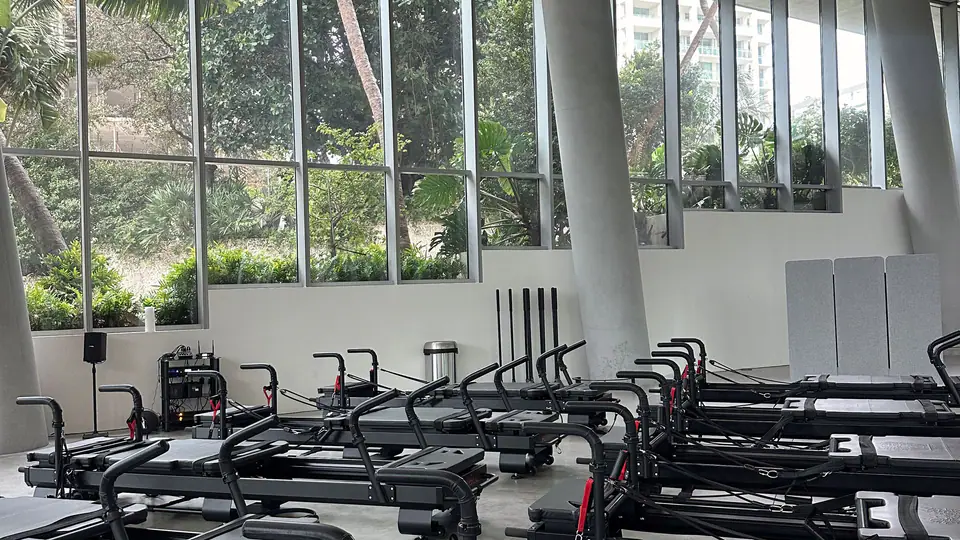
Pilates is a system of controlled exercises, mostly on a mat or a reformer, that trains trunk stability, hip and shoulder control and flexibility through precise low-load movement. Strength training is any program that loads a movement pattern and progresses the load, reps or sets over time — dumbbells, barbells, machines.
One is skill and control work. The other is force production work. Both are excellent. They are not interchangeable.
What each one is actually for
| Goal | The better tool | Why |
|---|---|---|
| Bigger muscles | Lifting | Mechanical tension keeps rising |
| Max strength | Lifting | The definition of progressive overload |
| Bone density | Lifting | Only heavy loading reliably slows bone loss |
| Trunk control and posture | Pilates | Precise, high-rep trunk work is the whole method |
| Flexibility and mobility | Pilates | More range work per session than most lifting |
| Body awareness and balance | Pilates | Small, controlled, exact movement |
| Fat loss | Neither | That is the deficit's job |
The honest summary: lifting changes how much your body can do; Pilates changes how well you control it.
Where Pilates genuinely wins
Pilates is not just easier lifting. It does specific things unusually well:
- Trunk endurance and control — long, precise sets of trunk work beat what most lifters ever do for their midsection.
- A gentle entry point — returning from injury, pregnancy or a long break, the load is small and the movements are learnable.
- Movement quality — hip and rib control learned on the mat transfers to squatting and pulling. See mobility and stretching.
- Consistency — a 20-minute mat routine survives a busy week better than a gym commute.
- The goal is control, range of motion or a careful return to movement
- Stiff or cranky joints make heavy loading a bad idea right now
- It is genuinely the thing you will do three times a week
- The goal is bigger muscles or a heavier squat
- You are chasing the bone-density effect of loading
- You expect it to burn off fat — that is a deficit's job
The muscle question, answered honestly
Pilates can build some muscle in beginners, and it holds muscle better than doing nothing. But growth tracks mechanical tension, and tension needs load that keeps rising. The rules do not change because the room has a mirror and a spring machine — see how to build muscle.
The honest framing: Pilates is excellent movement practice and deliberately gentle loading. Use it for what it is good at.
What lifting does that nothing else does
Three adaptations are essentially reserved for loaded training:
- Bone density. Bone responds to force, and the lifting and bone density case is one of the strongest in the field.
- Strength that carries over. A stronger squat, hinge and press make every physical task cheaper.
- Metabolic health and longevity. Muscle is a glucose sink and a protein reserve — muscle and longevity covers what the data shows.
And it is not a big time commitment: two full-body sessions a week deliver most of the effect. That is the minimum effective dose worth protecting.
How to combine both in one week
- MondayLiftFull body — squat, press, row, hinge
- TuesdayPilatesMat or reformer, 45 minutes
- WednesdayRest or walkEasy movement only
- ThursdayLiftFull body — deadlift, press, pull, carry
- FridayPilatesTrunk and hip control focus
- SaturdayOptionalA lift, a walk or a class you enjoy
- SundayRestSleep and food do the adapting
Two lifting sessions and two Pilates sessions cover both worlds in under four hours a week. If muscle is the priority, lift early in the week and treat Pilates as the accessory slot; if control and recovery are the priority, flip the order.
- Pilates trains control and mobility; lifting trains force and muscle. They solve different problems.
- Muscle size, strength and bone density need progressive load — that is lifting's job.
- Pilates wins on trunk control, movement quality and an easy entry point after injury or a long break.
- Two lifts and two Pilates sessions a week cover both worlds in under four hours.
- Choose by goal, not by tribe — and keep whichever one you will actually do.
Frequently asked questions
Is Pilates or strength training better for weight loss?
Neither loses fat on its own — a calorie deficit does. Lifting protects muscle while you diet and Pilates burns a little more than sitting, so keep whichever you enjoy and fix the diet around it.
Can Pilates replace weight training?
Only if your goals stop at control and mobility. For muscle, strength and bone density the load has to keep progressing, and Pilates resists that quickly. One or two lifts a week is the honest compromise.
How many times a week should I do Pilates vs lift?
Two of each covers most goals. If muscle is the priority, lift two to four times and use one or two Pilates sessions as mobility and trunk work. If recovery is the priority, flip the ratio.
Is Pilates enough for bone density?
It beats nothing — especially mat work with bodyweight and springs — but the bone evidence is built on fairly heavy loading. Lifting a few times a week is the intervention the studies actually used.
Related guides
Calisthenics vs Weights: Which Builds More Muscle?
Calisthenics vs weights compared: which builds more muscle and strength, the pros and cons of each, and why you can combine them.
Intermediate · 3 min read
Mobility and Stretching for Lifters
Mobility vs flexibility, whether stretching prevents injury, dynamic vs static stretching, and a simple mobility routine to lift better and move well.
Beginner · 3 min read
Strength Training for Women: The Complete Guide
Strength training for women explained: why lifting will not make you bulky, how to train and eat, and how to get strong, toned and confident.
Beginner · 3 min read
How to Fix Posture: What Actually Works
How to fix posture for good: the exercises that work, what causes rounded shoulders and forward head, and why strength training beats stretching alone.
Beginner · 4 min read
This guide is general educational information, not medical advice. Train within your ability and consult a qualified professional before starting a new program if you have an injury or health condition.