
Lifting For Life · Beginner · 4 min read
Lifting and Bone Density: Train Your Skeleton Like a Muscle
Muscle adapts to training in weeks; bone adapts in months, but just as reliably, and it follows the same rule — load it and it densifies, unload it and it fades. The evidence that resistance training and impact protect bone density is strong, and for people facing osteoporosis it is close to a prescription. Here is what actually moves bone, and how to train it.
On this page
How bone responds to loading
Bone is a slow, loyal responder. Cells sense strain and redirect remodelling toward deposition where load arrives; measured density changes take six to twelve months, which is why the scale of "is it working" is a DEXA scan, not a feeling. The strongest levers are the biggest lifts with real weight progression — not endless light reps — plus impact like jumps and skips if joints allow.
- 1-2%Bone density lost per year untrained in the years after menopauseLoading slows the leak
- 2-3Loaded sessions a week for bone benefitConsistent and progressive
- 6-12Months before a DEXA shows the changeBone is slow but loyal
What builds bone and what does not
| Bone builders vs bone bystanders | B | |
|---|---|---|
| Load type | Heavy progressive lifts, impact | Swimming, cycling, light fixed reps |
| Direction | Axial and multi-direction | Single fixed path only |
| Progression | Weight rises over months | Same weight forever |
| Best sites | Hip, spine, wrist — the fracture sites | Rarely the ones that break |
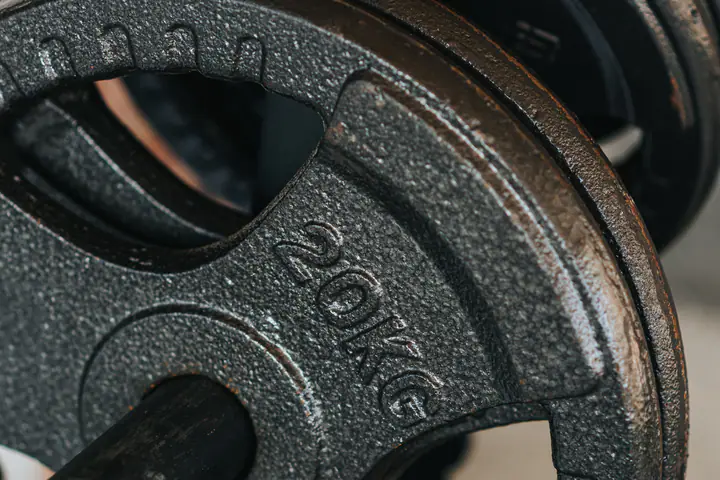
Sessions that build bone
- Load the big patterns progressively: squat or leg press, hinge or deadlift, press and pull, weight rising over months.
- Add impact if joints allow — jumps, skips, step-downs — a few sets, a few times a week.
- Deliberately load hip and spine: they are the fracture sites that matter.
- Feed it: protein at each meal, calcium-rich foods, vitamin D status checked.
Who benefits most? Women around and after menopause — the group bone density falls fastest for — plus anyone with low bone mass, long diets, low body weight or a very light training history. Track with a DEXA scan on a clinical schedule, not a feeling, and expect the first real signal no earlier than six months in.
Safety and the long view
Rules that keep bone training safe: learn form before load, progress in small jumps, avoid end-range spine rounding under load, and let pain — not pride — steer exercise choice. Bone density is a decades game played in quarters; the people with the strongest skeletons in their seventies are usually the ones who started loading in their forties and simply never stopped.
- Watson et al., 2018 — LIFTMOR trial: heavy supervised lifting improved bone density and function in women with low bone mass J Bone Miner Res
- Howe et al., 2011 — exercise for preventing and treating osteoporosis in postmenopausal women, Cochrane review Cochrane Database
- Nikander et al., 2010 — targeted exercise against osteoporosis: a review of loading modes Sports Med
- Bone densifies where you load it and fades where you do not.
- Heavy progressive lifting plus impact protects hip, spine and wrist density.
- Changes show on a DEXA in 6-12 months — bone is slow but loyal.
- Supervised lifting is safe and beneficial even with low bone mass.
- Feed the process: protein, calcium and vitamin D alongside the load.
Frequently asked questions
Can lifting actually increase bone density?
Yes — progressive resistance training and impact preserve and can modestly increase bone mineral density at loaded sites, with trials showing improvements in postmenopausal women.
Which exercises are best for bone?
Loaded compound lifts through the axial skeleton — squats, hinges, presses, rows — plus impact such as jumping or skipping when joints allow.
How long until bone density improves?
Bone remodels slowly: expect six to twelve months of consistent loading before a DEXA scan shows a measurable change.
Is weight training safe with osteoporosis?
Supervised, progressive lifting is safe and beneficial in trials, including heavy lifting in women with low bone mass. Learn form, progress slowly and avoid sudden loads.
Do I need calcium and vitamin D too?
Loading is the signal; calcium, vitamin D and protein are the raw materials. All three matter, and vitamin D status is worth checking with a doctor.
Related guides
Lifting Weights Over 40, 50 and Beyond
How to strength train safely and effectively over 40 and 50: why it matters more with age, how to adjust training and recovery, and where to start.
Beginner · 3 min read
Strength Training for Women: The Complete Guide
Strength training for women explained: why lifting will not make you bulky, how to train and eat, and how to get strong, toned and confident.
Beginner · 3 min read
Full-Body Workout Routine: The Best Plan for Beginners
A complete full-body workout routine: why it is ideal for beginners and busy lifters, a 3-day template, and how to progress for muscle and strength.
Beginner · 3 min read
Vitamin D for Lifters: Deficiency, Performance and Health
Vitamin D for lifters: why it matters for muscle, bone and immunity, who is at risk of deficiency, testing, safe doses, and what it can do for training.
Intermediate · 4 min read
This guide is general educational information, not medical advice. Train within your ability and consult a qualified professional before starting a new program if you have an injury or health condition.