
Muscle-Group Guides · Intermediate · 5 min read
How to Build Bigger Traps
Traps frame the whole upper body — they make a back look thick from the front and a neck look strong from the side. Yet most lifters train them with one shrug, done fast, at the end of a shoulder day. The trapezius is a large muscle with three regions, and each one asks for slightly different work.
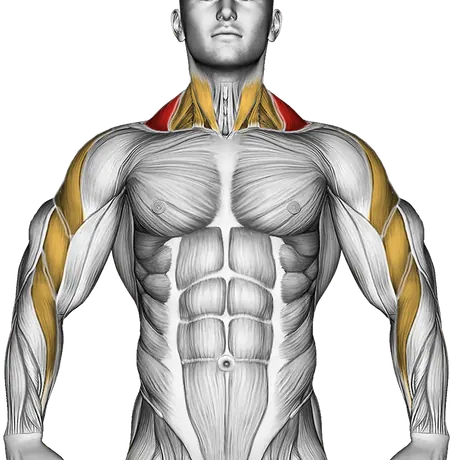 Front
Front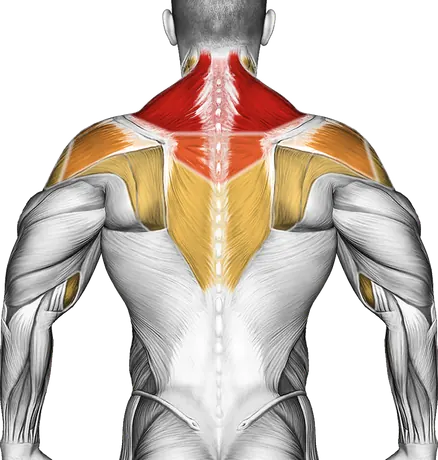 Back
Back- Upper traps100%
- Rear delts50%
- Middle traps75%
- Side delts25%
- Brachialis25%
- Brachioradialis25%
- Neck25%
On this page
What the traps actually do
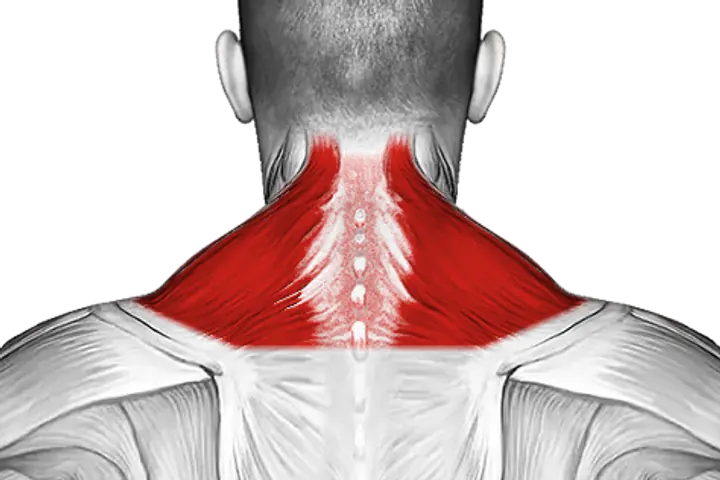
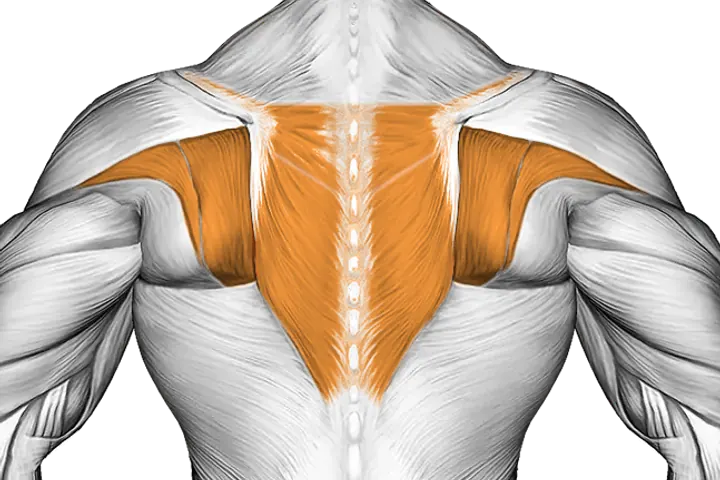
The trapezius runs from the base of the skull to the middle of the back, and it is really three muscles with different jobs:
| Region | Job | Best builders |
|---|---|---|
| Upper | Shrugs and supports the arms | Shrugs, rack pulls, heavy deadlifts |
| Middle | Pulls the shoulder blades together | Face pulls, wide rows |
| Lower | Pulls the shoulder blades down | Overhead work, prone raises |
The exercises that grow them
- Barbell or dumbbell shrug — the staple. Heavy, simple and honest; the dumbbell version lets the hands sit at your sides, which many shoulders prefer.
- Cable shrug — the stack keeps tension at the bottom stretch, where a dumbbell goes slack.
- Rack pulls and heavy deadlifts — the upper traps hold heavy loads hard; weeks of heavy pulls grow traps without a single direct set.
- Wide-grip upright row — upper traps plus side delts in one pull, kept below chest height.
- Face pull — mid traps and rear delts; the fix for shoulders that only shrug and press.
- Wide rows and chest-supported rows — mid-trap thickness that makes the whole back look denser.
Two or three of these, done well, beat a rotating menu of ten. For the pulling basics behind most of them, see pull-ups and rows.
Volume, reps and frequency
Traps recover fast and respond to frequency: two or three touches a week beats one crushing day. Direct sets look like this:
Shrug sets sit at eight to fifteen reps with a one-second squeeze at the top and a full stretch at the bottom. Rows and face pulls sit at ten to fifteen. Heavy pulls count toward upper-trap volume, which is why direct shrug work can stay lean. If traps are the priority, a short specialization phase with the extra three or four sets works well.
Shrug technique that actually works
- Hold the bar or dumbbells with straight arms and let your shoulders hang as low as they go — that stretch is the first half of the rep.
- Keep your arms completely relaxed; the traps, not the biceps, move the weight.
- Shrug straight up toward your ears without rolling your shoulders.
- Squeeze at the top for a beat — up, not back.
- Lower under control to the full hang, and feel the stretch before the next rep.
- A full stretch at the bottom of every rep
- Straight up and down, no rolling
- A squeeze at the top, heavy but controlled
- Shoulder rolling — circles do nothing the straight shrug does not
- Bouncing out of the stretch with momentum
- A weight so heavy the rep is a twitch
Mistakes that keep traps small
The four usual suspects: shrugging without a bottom half, rolling the shoulders, training them only as an afterthought once a week, and forgetting that rows and face pulls are trap work too.
The fix is the plan above: stretch every rep, shrug straight, spread nine or so upper-trap sets and six mid-trap sets across two or three sessions, and let heavy pulls do their share. For how traps fit the bigger picture, see how to build a wider back and how to build bigger shoulders.
- Traps are three regions: upper, middle and lower — train all three.
- Shrug straight up with a full stretch at the bottom and a squeeze on top.
- Nine or so direct upper-trap sets a week, plus heavy pulls.
- Face pulls and wide rows build the mid traps that rows often miss.
- Two or three sessions a week beats one crushing shrug day.
Frequently asked questions
How do I build bigger traps fast?
Train shrugs two to three times a week with a full stretch and squeeze, keep eight to twelve weekly upper-trap sets, and lean on heavy rack pulls and deadlifts. Visible change usually shows in eight to twelve weeks.
Should I roll my shoulders when shrugging?
No. Rolling adds nothing and invites neck strain. The shrug is a straight vertical movement — up toward the ears, squeeze, controlled drop into the stretch.
Do deadlifts build traps?
Yes, especially the upper traps, which support the heavy load statically. They grow from holding, which is why heavy pulls count toward trap volume even without a shrug.
Why do my traps grow but my mid-back does not, or the reverse?
Shrugs train the upper region; rows and face pulls train the middle. If one lags, shift sets toward it — the three regions respond to their own exercises.
High reps or heavy weight for traps?
Both work. Shrugs sit well at eight to fifteen reps with strict form; going heavier usually turns them into short twitches with no stretch, which is what wastes the exercise.
Related guides
How to Build a Wider, Thicker Back
How to build a bigger back: training for width and thickness, the best vertical and horizontal pulling exercises, ideal volume, and common mistakes.
Intermediate · 3 min read
How to Build Bigger Shoulders
How to build bigger shoulders: train all three delt heads, the best exercises for width, how many sets and reps, and the lateral raise mistakes to avoid.
Intermediate · 4 min read
Deadlift Form: How to Deadlift Safely and Strongly
How to deadlift with proper form: setup, neutral back, bracing, bar path and lockout, plus the common mistakes that cause back pain.
Beginner · 4 min read
Pull-Ups and Rows: How to Build a Strong Back
How to do pull-ups and rows with proper form: grip, scapular control, full range of motion, and the mistakes that turn back exercises into arm exercises.
Beginner · 4 min read
This guide is general educational information, not medical advice. Train within your ability and consult a qualified professional before starting a new program if you have an injury or health condition.