
Muscle-Group Guides · Beginner · 4 min read
How to Get Bigger Wrists
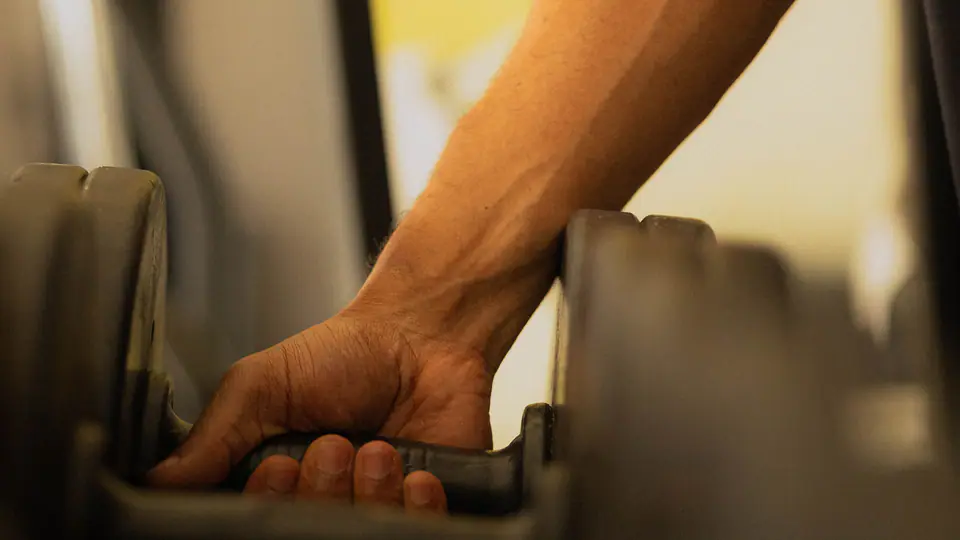
Small wrists are one of the most common complaints lifters have about their build — and the good news hides inside the bad news. The wrist joint itself is bone and cannot grow, but the forearm muscle around it is completely trainable, and thick forearms are what actually make wrists look big.
On this page
Why wrists look small
Most of the "big wrist" look is average bones wrapped in developed forearms. The plan is simple: train the forearms directly, build the grip, and let the rest of your training add the base.
Grip is the builder
- Farmers carries — walk 30 to 60 seconds with the heaviest dumbbells you can hold.
- Dead hangs — hang from a bar for 20 to 60 seconds, and add weight over time.
- Plate pinches — pinch two smooth plates together in each hand.
- Wrist curls and reverse wrist curls — the direct forearm work.
- Train grip twice a week, at the end of your normal sessions.
Grip work does not need much volume — it needs load and consistency. Two short sessions a week beat one long one, and the grip recovers faster than most muscles.
The forearm exercises that work
The forearms are built from three angles:
- Flexor side (the underside): wrist curls, 3 sets of 10 to 20 reps.
- Extensor side (the top): reverse wrist curls, 3 sets of 10 to 20 reps.
- Thickness: farmers carries and plate pinches, 3 rounds each.
Everything that pulls hard already adds to this — rows, deadlifts and pull-ups all grow the forearms without one isolation set. See pull-ups and rows and how to build bigger forearms for the full routine.
A weekly routine
- MonDead hangs + wrist curls3 × 30 s + 3 × 15
- WedFarmers carries3 × 40 s, as heavy as you can hold
- FriReverse curls + plate pinches3 × 15 + 3 × 20 s
- Every dayNothing extraGrip grows on rest days too
Attach this to the end of your normal sessions — it adds five minutes and changes how the whole forearm looks.
What cannot be changed
That is good news: the forearm look is completely trainable, and it is the part people actually see.
Why grip strength matters beyond looks
A stronger grip makes every pull easier — deadlifts stop slipping, rows and pull-ups stop failing at the hands, and the forearms stop taking over from the back. It is also one of the best single markers of overall strength as you age. See grip strength for the details, and how to measure progress so the gains do not hide from you.
- The wrist is bone and its size is genetic — the forearm around it is what you can grow.
- Thick forearms are the look: flexors, extensors and overall thickness.
- Farmers carries, dead hangs and plate pinches build the grip that thickens the arm.
- Two short grip sessions a week beat one long one.
- A stronger grip also makes deadlifts, rows and pull-ups easier.
Frequently asked questions
Can wrists actually get bigger?
The joint itself cannot — bone width is set. But the forearms around it grow like any muscle, and thicker forearms make the wrists look clearly bigger.
Why are my wrists so skinny?
Mostly genetics — wrist bone size is set before adulthood. Small wrists are not a weakness; they often make the forearms look bigger once trained, because the contrast is higher.
How long until forearms look bigger?
Forearms respond like other muscles: expect visible change in 8 to 12 weeks of twice-a-week direct work, with the biggest changes by 6 months.
Do grip trainers work?
They add endurance and a little size, but loaded carries, hangs and wrist curls build more muscle than any squeeze gadget — the hands already hold things all day.
Related guides
Grip Strength for Lifters
Grip strength for lifters: the three types of grip, the best exercises to train them, how to program grip work, and when to use chalk and straps.
Intermediate · 4 min read
How to Build Bigger Forearms
How to build bigger, stronger forearms: the best exercises, how often to train them, and why grip-heavy lifting already does much of the work.
Intermediate · 3 min read
Pull-Ups and Rows: How to Build a Strong Back
How to do pull-ups and rows with proper form: grip, scapular control, full range of motion, and the mistakes that turn back exercises into arm exercises.
Beginner · 4 min read
Deadlift Form: How to Deadlift Safely and Strongly
How to deadlift with proper form: setup, neutral back, bracing, bar path and lockout, plus the common mistakes that cause back pain.
Beginner · 4 min read
This guide is general educational information, not medical advice. Train within your ability and consult a qualified professional before starting a new program if you have an injury or health condition.