
Getting Started · Beginner · 3 min read
Gym Machines: What Each One Does and Where to Start
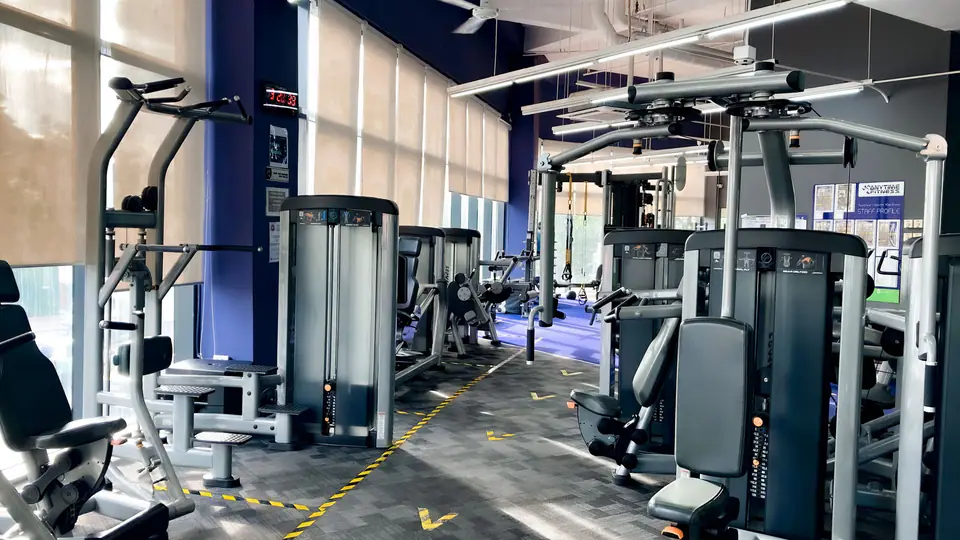
Machines are the friendliest tools in the gym and the most mysterious to newcomers: rows of seats, pins and levers with no instructions attached. The good news — machines are safe, quick to learn, honest about progress, and they let you push close to failure without a spotter. This guide walks through the main stations, the 10-second setup each one needs, and how they fit around free weights.
On this page
Why machines are worth using
- 1Adjustment per machine, usually seat heightSet it, check the range, go
- 8-15The comfortable learning rep rangeEffort still decides results
- 0Balance demandPush close to failure safely, no spotter
Machines vs free weights
| Machines vs free weights | B | |
|---|---|---|
| Learning curve | Minutes | Weeks |
| Safety near failure | Excellent | Spotter required |
| Stabilizers | Guided path | You do the guiding |
| Muscle growth | Similar per study | Similar, more skill |
| Best use | Isolation, safe failure | Strength, patterns |
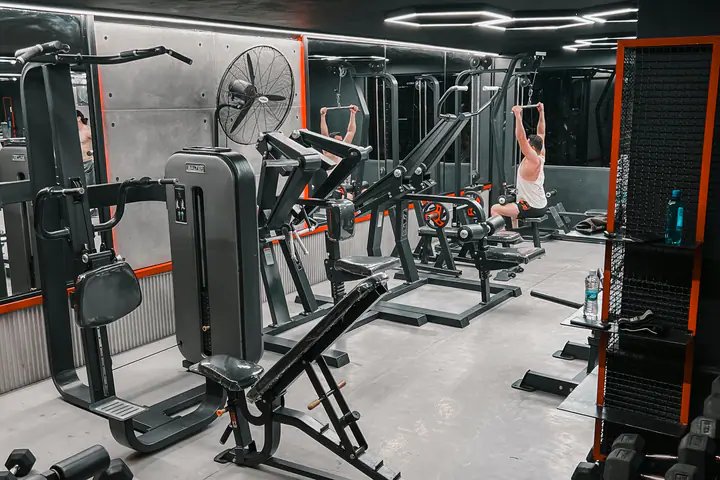
The main stations, decoded
- Chest press — the seated bench: handles at chest height, press without locking elbows hard.
- Lat pulldown — vertical pull for lats and upper back: grip just outside shoulders, pull to collarbone.
- Seated row — horizontal pull for the mid-back: chest on pad, pull to the belly.
- Leg press — the guided squat: feet flat, knees track over toes, stop before the hips curl off the seat.
- Leg extension and leg curl — quads and hamstrings in isolation, pad just above ankle.
- Calf raise — straight or seated, full stretch at the bottom, pause at the top.
A first machine workout fits on a card: chest press, lat pulldown, seated row, leg press, leg curl — two sets of 10-15 each, one or two reps left in reserve, moving the pin up when the top of the range feels easy. That is a complete beginner program hiding inside five machines.
Combining with free weights
- Schick et al., 2010 — machine vs free-weight bench press: similar prime-mover activity, more stabilizer demand free J Strength Cond Res
- ACSM, 2011 — position stand: exercise quantity and quality for adults Med Sci Sports Exerc
- Machines fix the path: safe failure, easy learning, pin-based progress.
- One adjustment per machine — usually seat height — then check the range.
- Muscle activity is similar to free weights per studies; free adds stabilizer work.
- Five machines cover a full beginner workout: press, pulldown, row, leg press, curl.
- Machines and free weights are colleagues — most good plans use both.
Frequently asked questions
Are machines good enough to build muscle?
Yes. Studies show similar muscle activity and growth to free-weight equivalents at matched effort. Free weights add skill and stability training, not magic.
How do I set up a machine?
Adjust the seat so the joint lines up with the pivot, run one slow unweighted rep to check the range, then start a few plates lighter than you think.
Should beginners use machines or free weights?
Either, honestly — machines are the safer start, free weights teach patterns faster. A mix is what most good beginner plans use.
Can I build a full program with only machines?
Yes — press, pulldown, row, leg press, extension, curl and calf raise cover the whole body with safe failure and simple progress.
What weight should I start with?
Low enough that the last three reps of your first set feel easy, then move the pin up as the top of the range gets comfortable.
Related guides
Free Weights vs Machines: Which Is Better?
Free weights vs machines for building muscle and strength — the real pros and cons, what the research says, and how to use both for the best results.
Beginner · 3 min read
Best Beginner Workout Plan for Building Muscle and Strength
A simple beginner workout plan that builds strength, teaches good form, and helps you stay consistent without making training overly complicated.
Beginner · 3 min read
How to Choose Your Starting Weight in the Gym
How beginners should choose a starting weight for any exercise using warm-up sets, reps in reserve, form quality and simple progression rules.
Beginner · 4 min read
Gym Confidence for Beginners: How to Feel Comfortable Fast
How to build gym confidence fast as a beginner: why gym anxiety is normal, what to do before your first visit, a simple first-week plan, and habits that help.
Beginner · 4 min read
This guide is general educational information, not medical advice. Train within your ability and consult a qualified professional before starting a new program if you have an injury or health condition.